
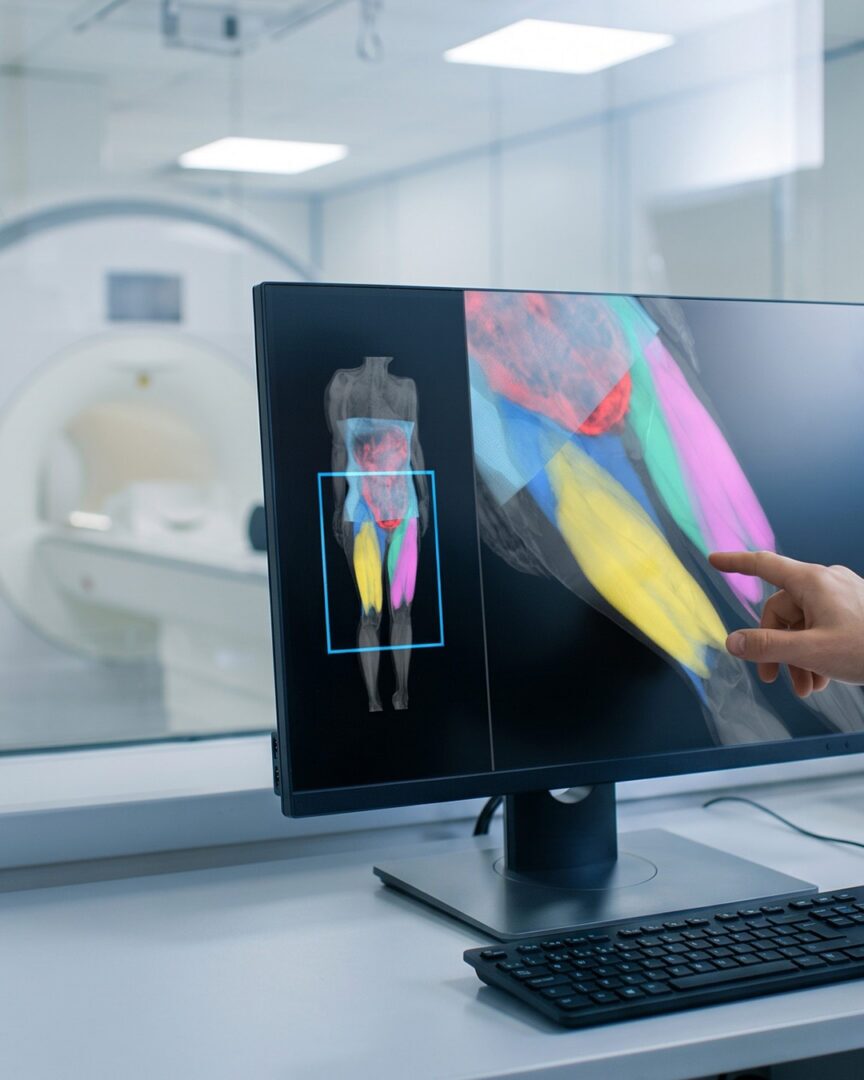
LINKÖPING, Sweden, October 21, 2026 – Weight loss tells us how much the body changes, but understanding what is changing within the body can provide an important additional perspective. A newly-published analysis of the phase 3b STEP UP trial utilized AMRAⓇ Researcher to evaluate body-composition changes, alongside physical function, during 72 weeks of treatment with semaglutide combined with lifestyle intervention.
Published in Diabetes, Obesity and Metabolism, the analysis focused on participants with a valid baseline MRI scan from the broader study. Quantitative MRI was used to assess adipose and lean body tissue volumes, visceral adipose tissue, thigh skeletal muscle volume and muscle fat infiltration. Physical function was assessed using the 30-second sit-to-stand test. In the pooled semaglutide group, the analysis showed reductions in adipose tissue volume, thigh skeletal muscle volume and thigh muscle fat infiltration, while the number of sit-to-stand repetitions was preserved.
The findings highlight that combined evaluation of muscle quantity, muscle composition, and physical function can provide a more comprehensive understanding of weight loss in future clinical trials. Lean body mass is also not synonymous with skeletal muscle; it includes other tissues and fluids, which can make it difficult to understand changes in skeletal muscle when relying on lean-mass measurements alone.
Quantitative MRI provides the ability to assess distinct anatomical tissue compartments, for example, by providing measures of skeletal muscle volume and muscle fat infiltration. Looking at these measurements alongside physical function can provide a more detailed characterization of relevant body changes during weight loss. In STEP UP, reductions in thigh skeletal muscle volume occurred alongside reductions in thigh muscle fat infiltration and preserved physical function as measured by sit-to-stand tests.
The study provides a compelling example of how quantitative MRI can help clinical-development teams move beyond bodyweight alone and more precisely characterize changes in adipose tissue and skeletal muscle during obesity treatment. It also sets the stage for further research in different populations to assess muscle tissue adaptations across broader cohorts.
Explore how AMRA’s quantitative MRI analysis solutions can support deeper characterizations of muscle composition and fat distribution in obesity research.
About AMRA Medical
AMRA Medical is a global leader in health informatics, pioneering the field of fat and muscle analysis with proprietary, MRI-based technologies. Our gold-standard platform delivers highly precise and standardized biomarkers, providing an advanced understanding of metabolic and musculoskeletal health that surpasses conventional measures of muscle and fat. These insights play a critical role in optimizing clinical trial design, improving endpoint selection, and supporting data-driven decision-making in both research and clinical practice.
MEDIA CONTACT
Melinda Perjons, Communication Strategist
melinda.perjons@amramedical.com