
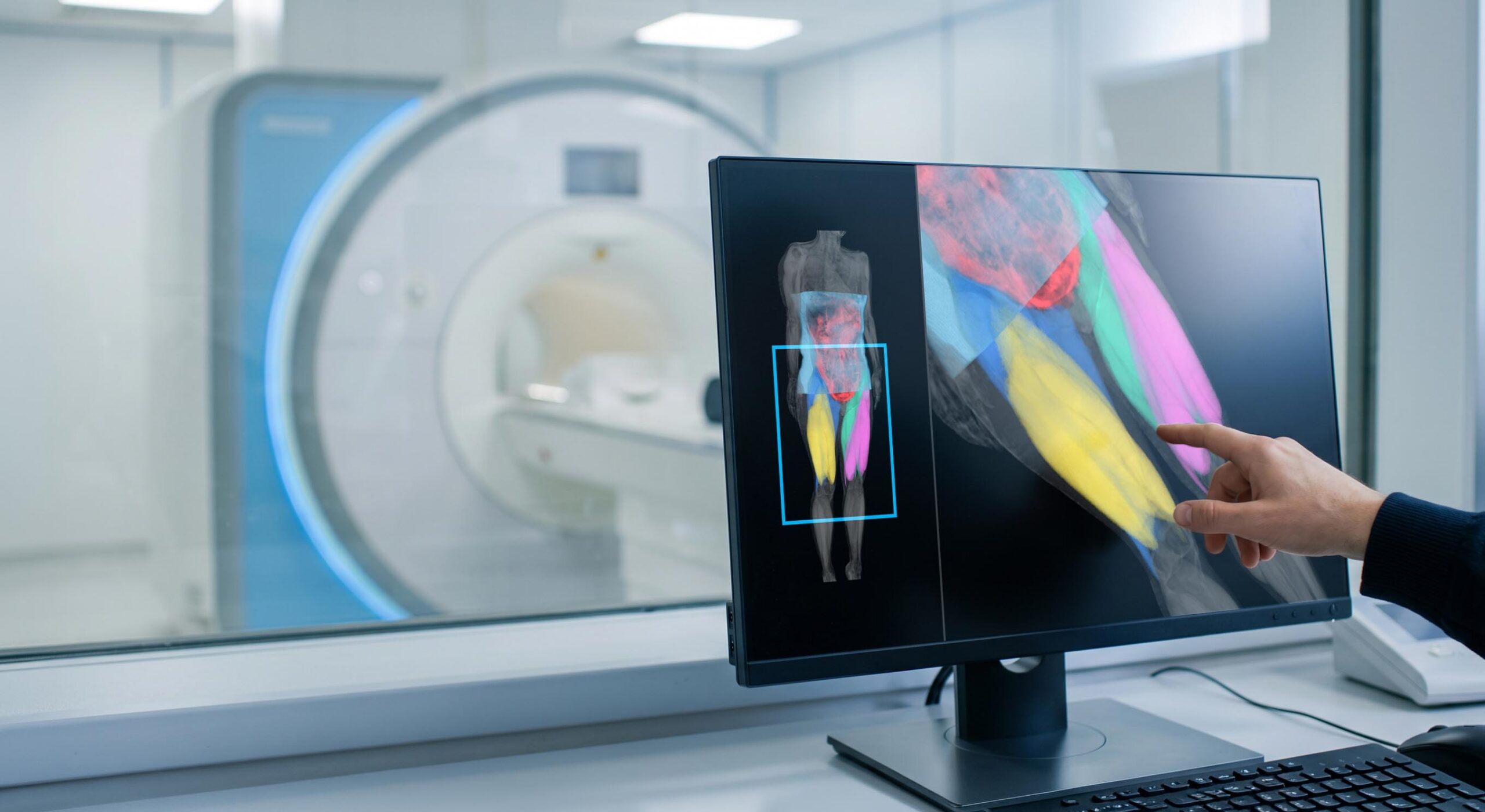
Beyond Weight Loss
Quantitative MRI Insights from the STEP UP Trial
As obesity therapies advance, understanding what changes during weight loss—not just how much weight is lost—is increasingly important for clinical development.
Traditional measures, including body weight and DXA-derived lean mass, provide meaningful information but cannot distinguish changes in skeletal muscle volume, muscle composition, and adipose tissue distribution. A recently published secondary analysis of Novo Nordisk’s Phase 3b STEP UP trial demonstrates how quantitative MRI can provide more detailed insights into these treatment-related changes.
STEP UP
Looking beyond body weight
The analysis evaluated body composition and physical function in adults with obesity receiving once-weekly semaglutide (7.2 mg or 2.4 mg) or placebo, alongside lifestyle intervention, over 72 weeks.
Using AMRA® Researcher, investigators assessed adipose tissue distribution, thigh skeletal muscle volume, and muscle fat infiltration. Physical function was evaluated using the 30-second sit-to-stand test.

Key findings
In the pooled semaglutide groups:
- Weight reduction: Mean body weight decreased by 17.4% (19.5 kg)
- Adipose tissue: A significant portion of the total mass loss consisted of fat mass, including a 1.5 L reduction in visceral adipose tissue.
- Muscle volume: Thigh skeletal muscle volume decreased by 1.1 L, corresponding to a 0.35 reduction in weight-invariant muscle volume z-score.
- Muscle composition: Muscle fat infiltration declined by 0.92 percentage points, approximately a 10% relative reduction.
- Physical function: Performance on the 30-second sit-to-stand test was maintained.
In summary, the study showed that participants treated with semaglutide as an adjunct to lifestyle intervention lost substantial body and visceral adipose tissue volumes, and showed reductions in both thigh skeletal muscle volume and thigh muscle fat infiltration with preserved physical function as indicated by the sit-to-stand test.
Implications for obesity drug development
The STEP UP findings underscore the value of assessing muscle quantity and composition as distinct endpoints rather than relying on body weight or lean mass alone.
Quantitative MRI enables more detailed characterization of treatment-related changes in adipose tissue distribution, skeletal muscle volume, and muscle fat infiltration.
These measurements obtained via MRI can help sponsors:
- Characterize the effect of weight loss therapies on body composition beyond total weight change.
- Evaluate muscle-related outcomes using distinct measures of muscle volume and muscle composition.
- Generate evidence to support comparisons across therapeutic approaches and inform future clinical development.
As the obesity treatment landscape evolves, integrating advanced body composition measurements into clinical trials can provide a more comprehensive understanding of treatment effects and potentially support therapeutic differentiation.
Want to know more?

Discover how AMRA can support advanced body composition assessment in your clinical development program.